
Creative Toy Storage Ideas That Keep Your Living Room Looking Sophisticated
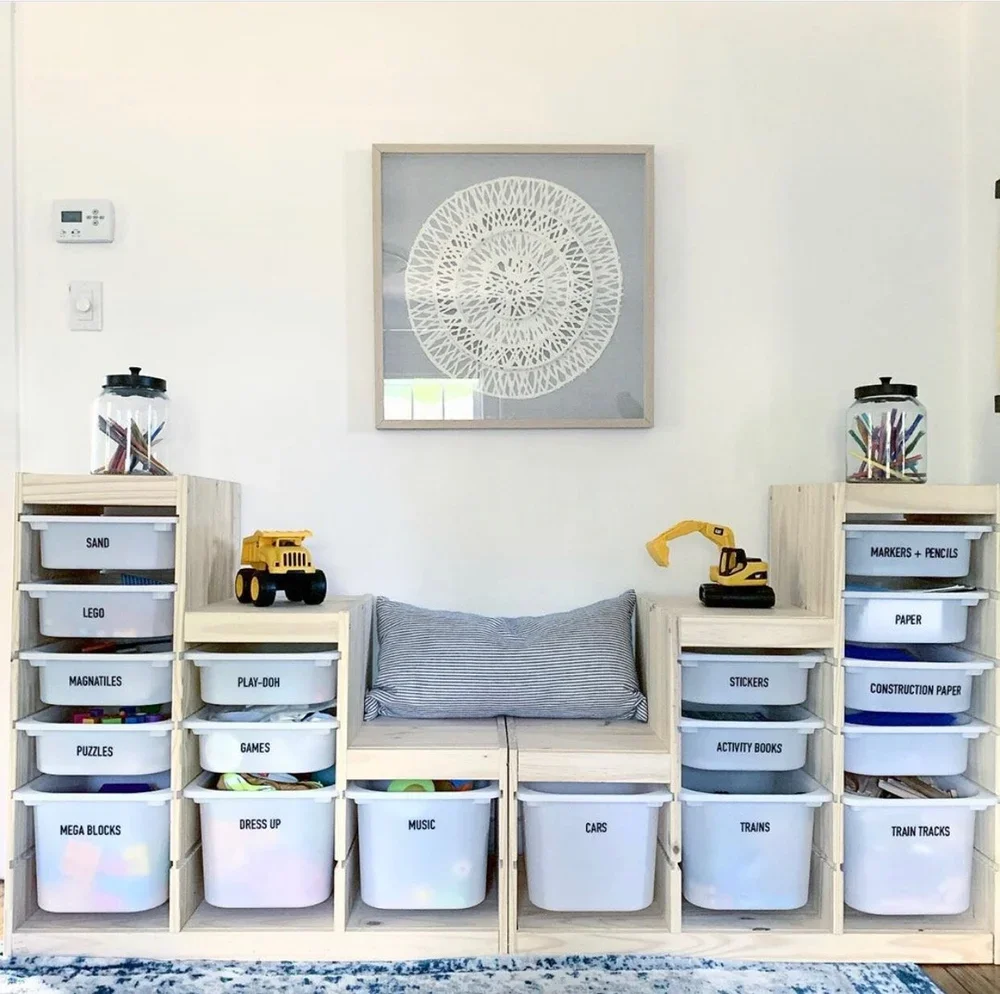
A living room can quickly become the unofficial playroom, especially in a smaller home where every room needs to serve multiple purposes. In a Corona del Mar condo, Laguna Beach cottage, or compact family home, toys can easily take over the floor, coffee table, and sofa before lunchtime.
The answer isn't to make your living room feel off-limits to children. It is really about building a little system that works with play while keeping that calm, polished atmosphere you want in a shared space.
The best toy storage ideas fade into the room, make cleanup feel obvious and quick, and help each category have a defined spot. With some smart editing and a couple of strategic storage picks, your living room can stay warm for kids without turning into a permanent playroom, and still look put together.
Start Living Room Toy Organization With a Complete Sort
Before purchasing baskets, cabinets, or storage furniture, gather every toy currently living in the room. Check under the sofa, inside ottomans, behind chairs, and in nearby cabinets.
Sort Everything Into Simple Categories
A calm starting point for organizing playtime
- 🧱 Building toys
- 🪆 Dolls and figures
- 🚗 Vehicles
- 🧩 Puzzles and games
- 📚 Books
- 🎨 Art supplies
- 🧸 Stuffed animals
- 🍼 Baby or toddler toys
Once similar items are grouped, you can see how much storage for toys each category actually requires. You may discover duplicate toys, incomplete sets, or items your children have outgrown.
Make separate piles for what to keep, donate, relocate, repair, or discard. Try not to organize toys that no longer fit your family routine right now. Do a bit of editing first; it helps you avoid buying extra containers and makes the whole system feel lighter afterward.
Choose Storage for Toys That Looks Like Living Room Furniture
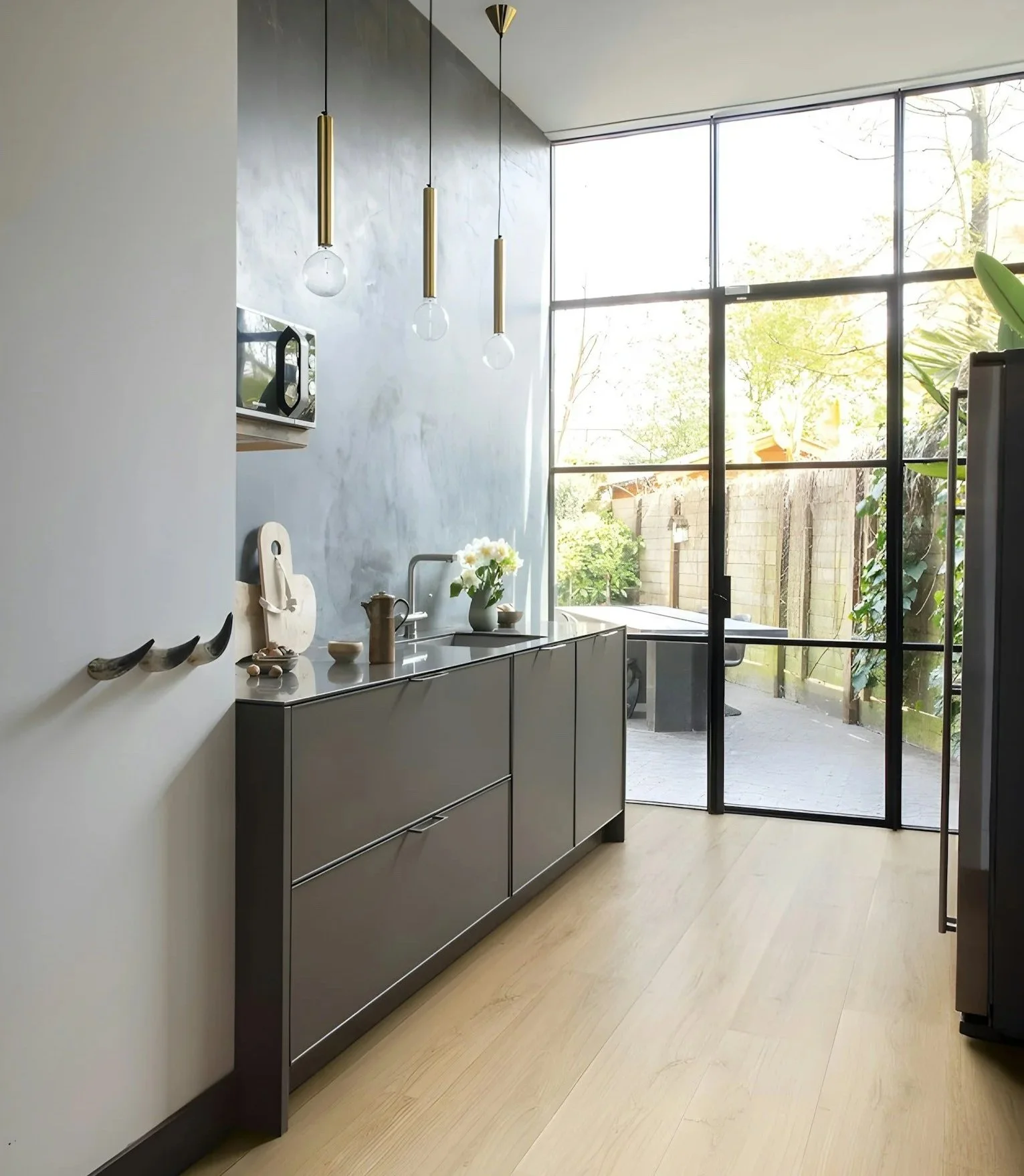
Open plastic tubs may work in a dedicated playroom, but they can really mess up the visual flow in a sophisticated living room. Really, instead of keeping things out in the open, pick storage pieces that look like deliberate furniture, and that match the room’s existing finishes, even if you’re 100% doing kid stuff.
Like, a storage ottoman can hold plush toys, blocks, or even larger playsets, while also serving as a footrest or extra spot to sit. A low sideboard can hide puzzles and games behind closed doors, so it doesn’t look cluttered. Then there’s a console with drawers, which can hold art supplies, smaller figures, and those instruction booklets that somehow multiply.
To keep it feeling cohesive, repeat the materials already in the room. Think woven fibers, warm wood, linen, leather, or matte painted finishes. When storage is built into things like the coffee table, rug, and seating, it starts to feel like a design choice rather than something added purely for children.
Use Hidden Toy Storage Ideas in Underused Spaces
In a compact living room, the most valuable storage is often hiding in plain sight. Look for areas that are currently empty or underused.
Slide shallow lidded bins beneath the sofa if there is enough clearance. Use the lower shelf of a console for matching baskets. Add storage cubes beneath a window seat, or place a narrow cabinet in an unused corner.
Even the space behind a sofa can become useful. A slim console table with drawers or covered baskets can create a discreet toy station without reducing the main seating area.
Measure each space before buying anything. A container that is only an inch too tall or too deep can become frustrating to use. Storage works best when it fits comfortably and can be opened without moving furniture.
Build Vertical Living Room Toy Organization
When the usable floor space is cramped, look upward. Vertical organization can really boost capacity, even when you keep a small footprint; that’s the point. A tall bookcase can blend adult decor with children’s essentials. Put your favorite books, framed pictures, and decorative objects on the upper tiers. Then let the lower shelves hold sturdy baskets or bins that kids can access on their own, without too much fuss.
Wall-mounted or built-in cabinets are also a great solution. Closed storage helps reduce visual clutter, while open recesses can display a curated assortment of children’s books or good-looking wooden toys.
Make sure you fasten tall units or anything mounted to the wall securely, especially if there are young children in the house. Heavier toys should stay on the lower shelves, and lighter items or anything adults handle can go higher.
Create a Kid-Friendly Living Room Design With Clear Zones
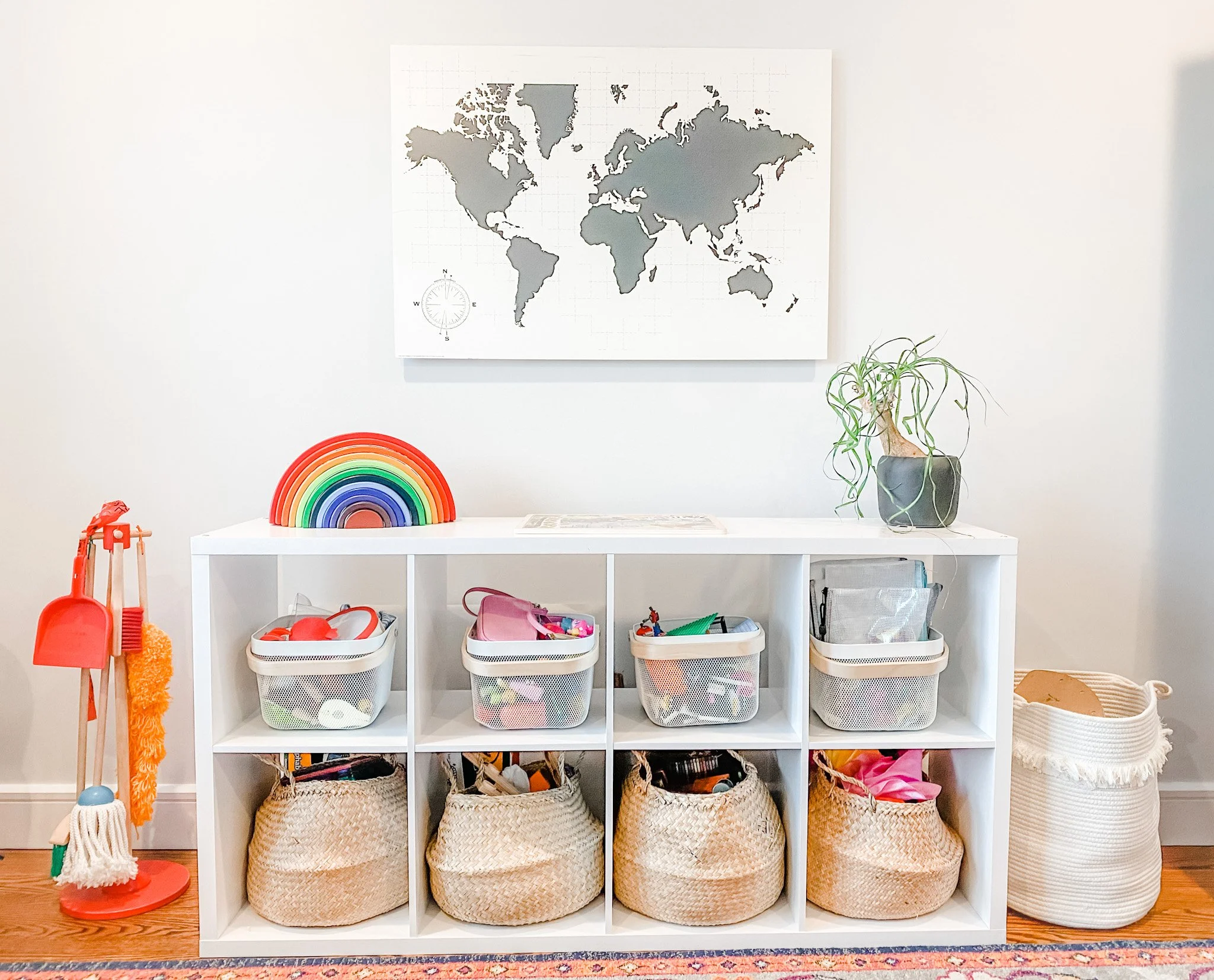
A successful kid-friendly living room design allows children to play without letting toys spill into every corner.
Choose one defined play zone, such as the area beside the sofa or a section of the rug. Store the toys used in that zone nearby so children do not need to carry items across the room.
You Might Create
Simple spots that give every item a home
- 📖 A reading basket beside a comfortable chair
- 🧱 A building-toy drawer under the console
- 🧩 A puzzle cabinet near the coffee table
- 🎨 A small art caddy that can be brought to the table
- 🧺 A basket for toys that need to return to another room
A defined zone makes both play and cleanup more predictable. It also prevents the entire living room from becoming one large storage area.
Make Storage for Toys Easy for Children to Maintain
A beautiful system will not last if it is too complicated for the people using it. Containers should be light enough for children to move, shelves should be reachable, and categories should be broad enough to understand.
For younger children, use picture labels with simple words. Older children may only need clear text labels such as “Cars,” “Blocks,” “Games,” or “Art.”
Avoid creating overly specific categories. A child is more likely to maintain one bin labeled “Animals” than separate containers for jungle animals, farm animals, and dinosaurs.
Try to use limit stacking in child-accessible areas. For example, if children have to remove three containers just to reach one toy, they're less likely to put everything back, and it turns into a little mess. Also, the categories that are used most often should be the easiest to reach, not the ones way at the back.
Borrow Playroom Organizing Techniques Without Creating a Playroom Look
Many effective playroom organizing strategies also work in a shared living room. The difference is in how they are styled.
Use matching baskets rather than a mix of brightly colored containers. Decant small pieces into streamlined boxes. Place visually busy toys behind closed doors and reserve open storage for books or toys that complement the room.
Toy rotation is really helpful in small homes; it makes a difference. Just keep a manageable bunch in the living room and put the rest someplace else. Every few weeks, swap a few categories around. Kids often get more interested in toys when there are fewer choices, and honestly, the living room is easier to reset.
Establish a Five-Minute Evening Reset
The last step is building a simple routine that makes sure day-to-day play doesn’t slowly turn into permanent clutter. Before dinner, or even right before bed, set aside about five minutes for everyone to put toys back in their labeled spots. Also, keep a small “belongs elsewhere” bin in the living room for items that need to be returned to bedrooms or another play zone.
Empty that basket regularly rather than allowing it to become permanent storage.
A well-designed system should make resetting the room straightforward. When every toy has a logical home, cleanup requires less decision-making and becomes easier for the entire family to follow.
Sophisticated Toy Storage Ideas Can Still Support Real Family Life
A refined living room does not have to erase every sign that kids live in the home. It just needs some systems that balance accessibility, capacity, and visual calm- steady and easy.
When you edit the collection, use concealed storage, make the vertical space work harder, and set clear play zones, you can build a living room toy organization that still functions even in the tiniest layout.
The target is not a room that always looks perfectly untouched. It’s more like a room that can flow between playtime, family time, and entertaining, then back to order again without this endless cleanup effort.
If your current setup stops working, professional organization can really help you sort what you own, decide what belongs in that space, plan storage around your family’s routines, and build a polished system that is realistic enough to keep up with.