
ADHD Home Organization for Visually Minded Professionals
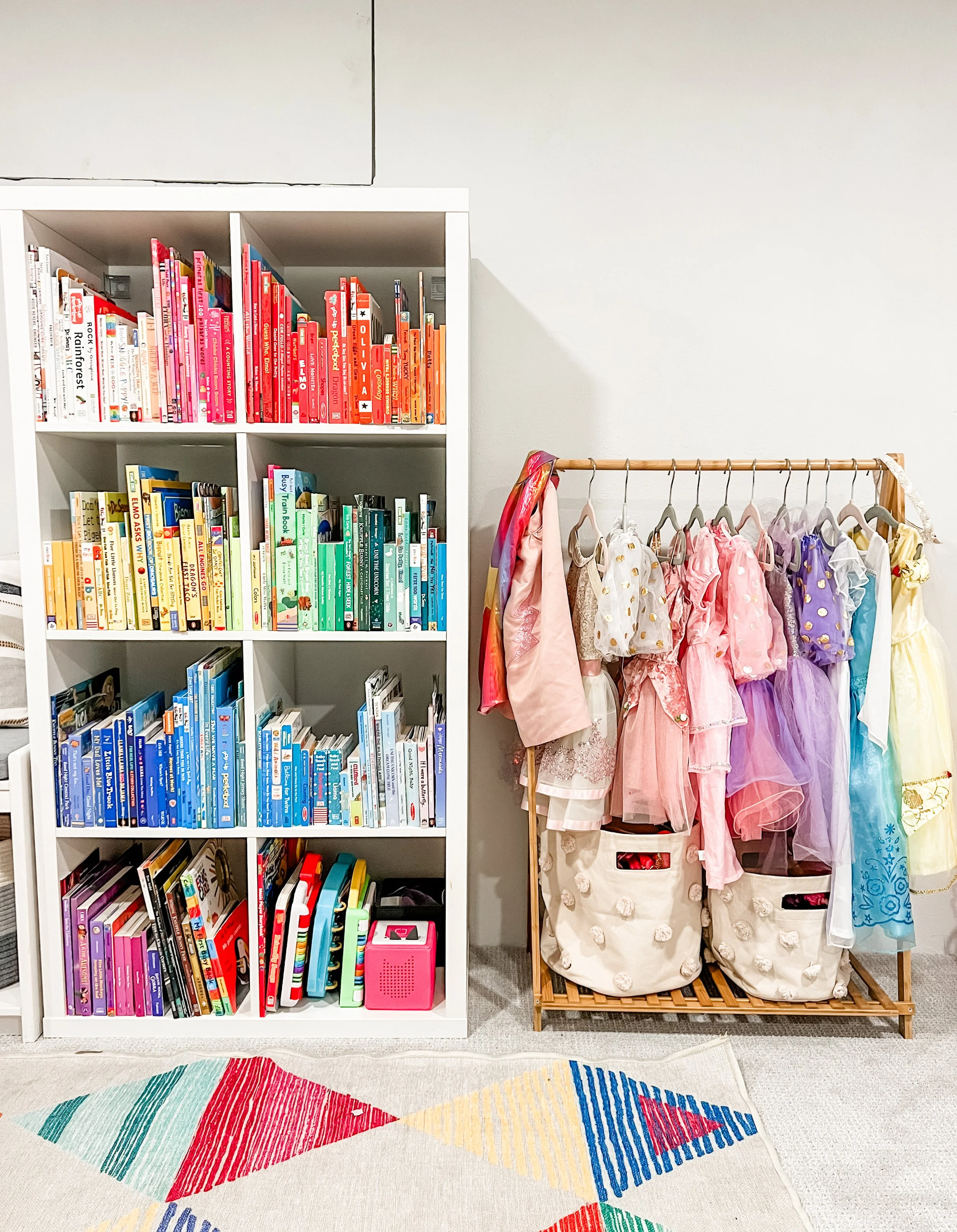
A space that is beautifully organized should do more than look polished, ya know. It’s supposed to help you get a grip on what you own; it can help you recall what needs your attention, and it lets you move through everyday tasks with way less friction, smoothly.
For professionals with ADHD or a strongly visual thinking style, traditional organizing advice can create more problems than it solves. A spotless desk with everything hidden inside identical containers may photograph well, but it can make essential items feel as though they have disappeared. A complicated filing system may seem efficient, yet become difficult to maintain after a busy week.
Effective ADHD home organization starts with a different kind of question. Instead of asking how an organized space “should” look, ask how the person naturally sees, remembers, and uses their belongings.
At Everyday Order™, custom organization systems are built around real habits and priorities. The goal isn’t to shove someone into a stiff routine or something overly rigid; it’s more about making the whole place feel obvious. The aim is to craft an intuitive environment that supports how their mind already works, not against it.
Why Standard Organizing Systems for ADHD Often Fail
Many conventional systems depend on remembering several invisible steps.
An item must be opened, sorted into a detailed category, placed inside a container, and returned to the correct drawer or cabinet. For someone who experiences distractibility, working memory challenges, or visual forgetfulness, each extra step can make the system harder to use consistently.
This does not mean the individual is incapable of staying organized. It usually means the environment is asking too much of them.
A system may fail when it includes:
- 🧩 Too many detailed categories
- 🙈 Storage that hides frequently used items
- 🔐 Containers that require several steps to access
- 🏷️ Labels that are vague or difficult to scan
- 📍 Items stored far from where they are used
- 🎭 A layout based on appearance instead of behavior
Professional home organization can reduce these barriers by making the correct action easier, faster, and more obvious.
Customized Home Organization That Works With Your Brain
Customized home organization begins with observation. Before selecting containers or printing labels, an organizer needs to understand how the client moves through the space.
Where do keys naturally land at the end of the day? Which documents are typically collected at the counter? What supplies need to remain visible? Which parts of the morning routine create delays?
These patterns are valuable information. They reveal where a system should be created instead of where a person should simply try harder.
Everyday Order’s organizing approach considers the client’s routines, storage preferences, available space, and visual style. Sorting, editing, product sourcing, placement, labeling, and styling are then combined to create a system that feels natural to use.
Create Storage Around Real ADHD Routines
An effective organizing system should meet belongings where they are already being used.
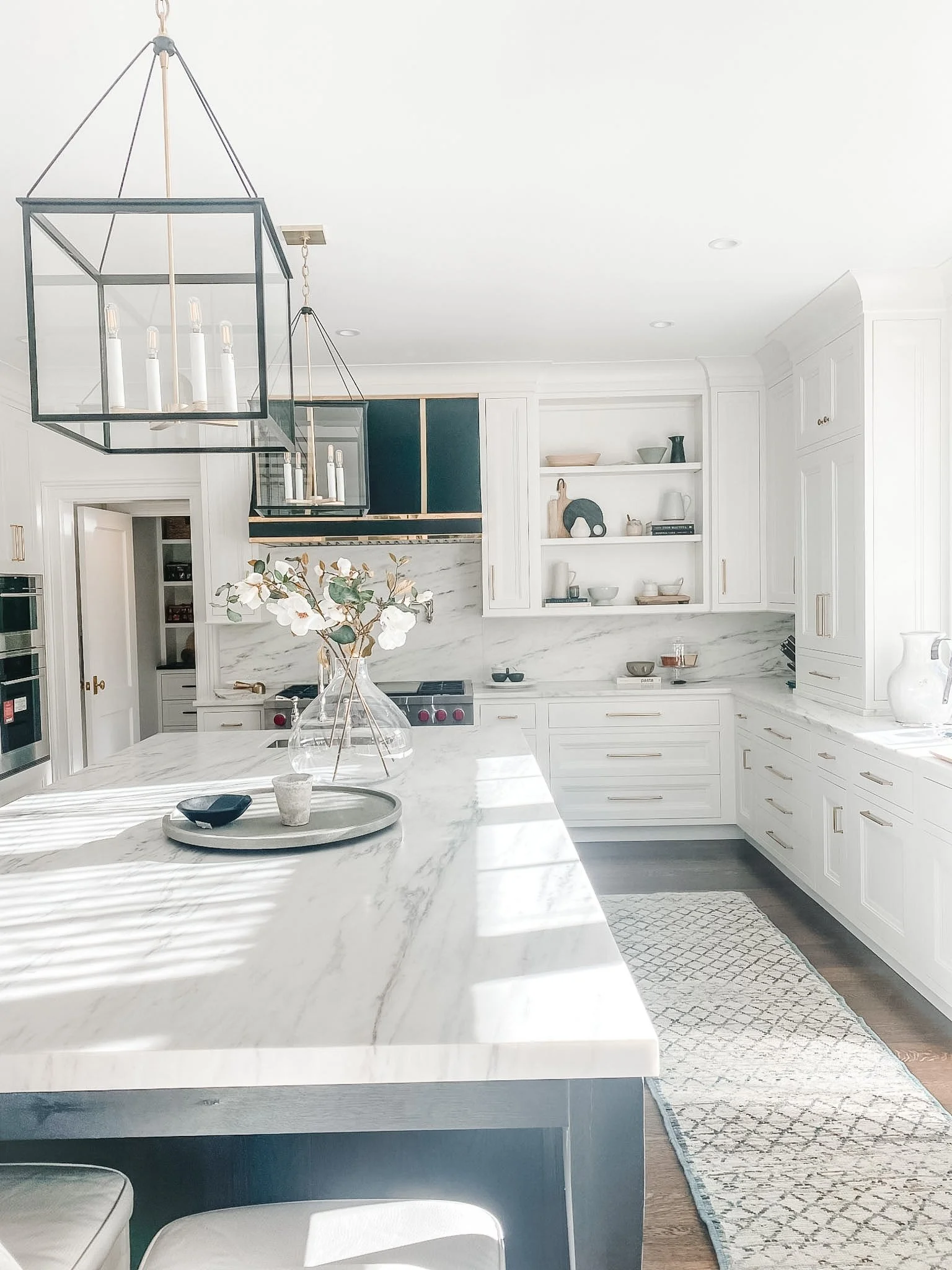
For example, a visually minded professional who reviews paperwork at the kitchen island may benefit from a compact action station nearby. A client who regularly leaves work supplies near the entry may need an attractive drop zone rather than repeated reminders to carry everything into an office.
The shortest path is often the most sustainable path.
Frequently used items should remain easy to reach. Occasional items can be stored higher or farther away. Tasks that happen together should have their tools stored together.
This type of habit-based organization reduces decision fatigue and makes resetting the space more manageable.
Use Visual Organization Systems Without Creating Clutter
Visibility can be extremely helpful for people who remember items by seeing them. However, leaving everything exposed can produce visual noise and make it harder to identify what matters.
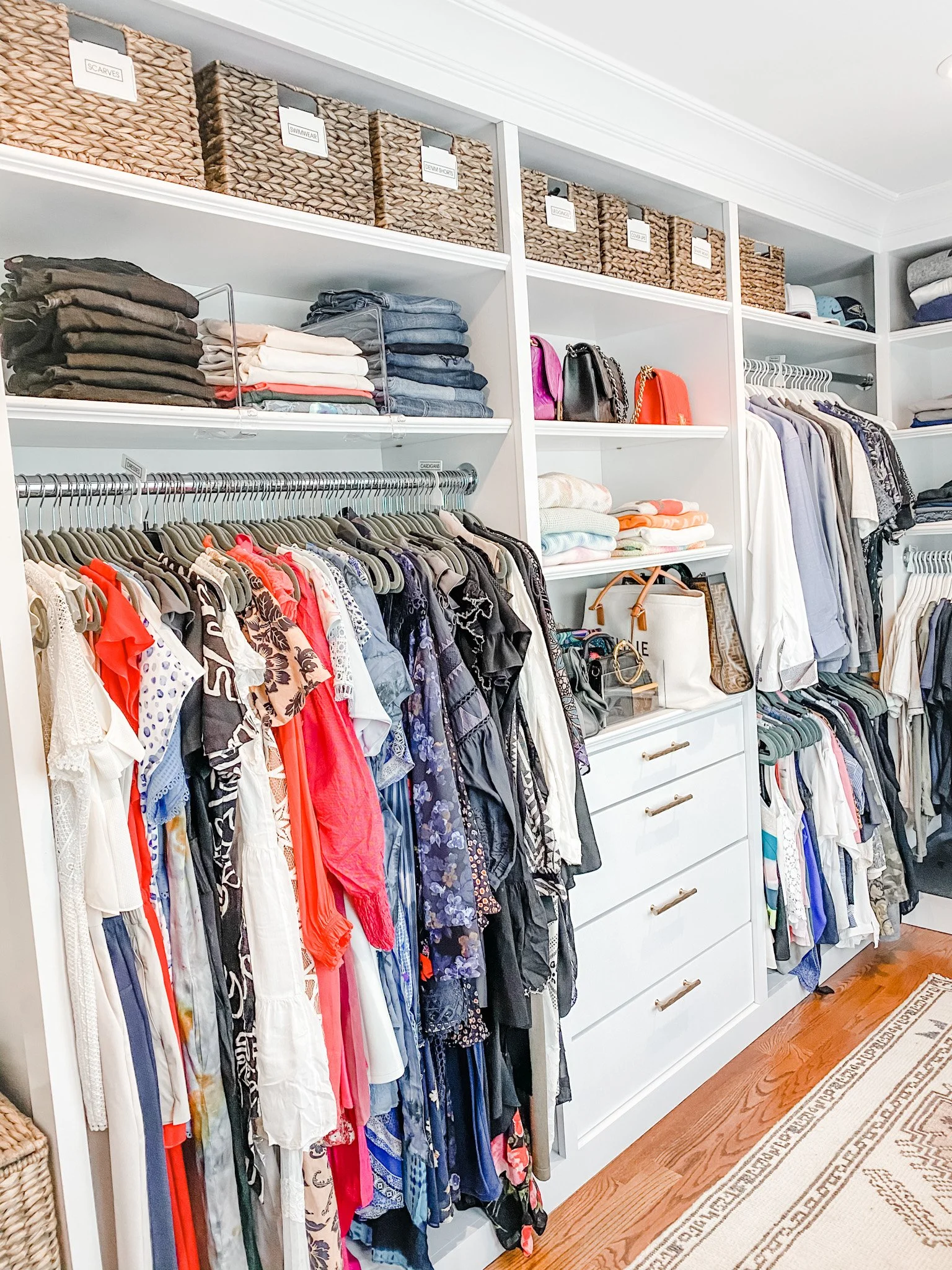
The solution is controlled visibility. You want things to show up enough so it’s not a mess, but still keep some boundaries. Clear bins can make supplies easier to spot and still help you establish where things belong. Open baskets hold everyday items without lids. Labels give the eye a clear destination, and color coding can quickly distinguish big categories.
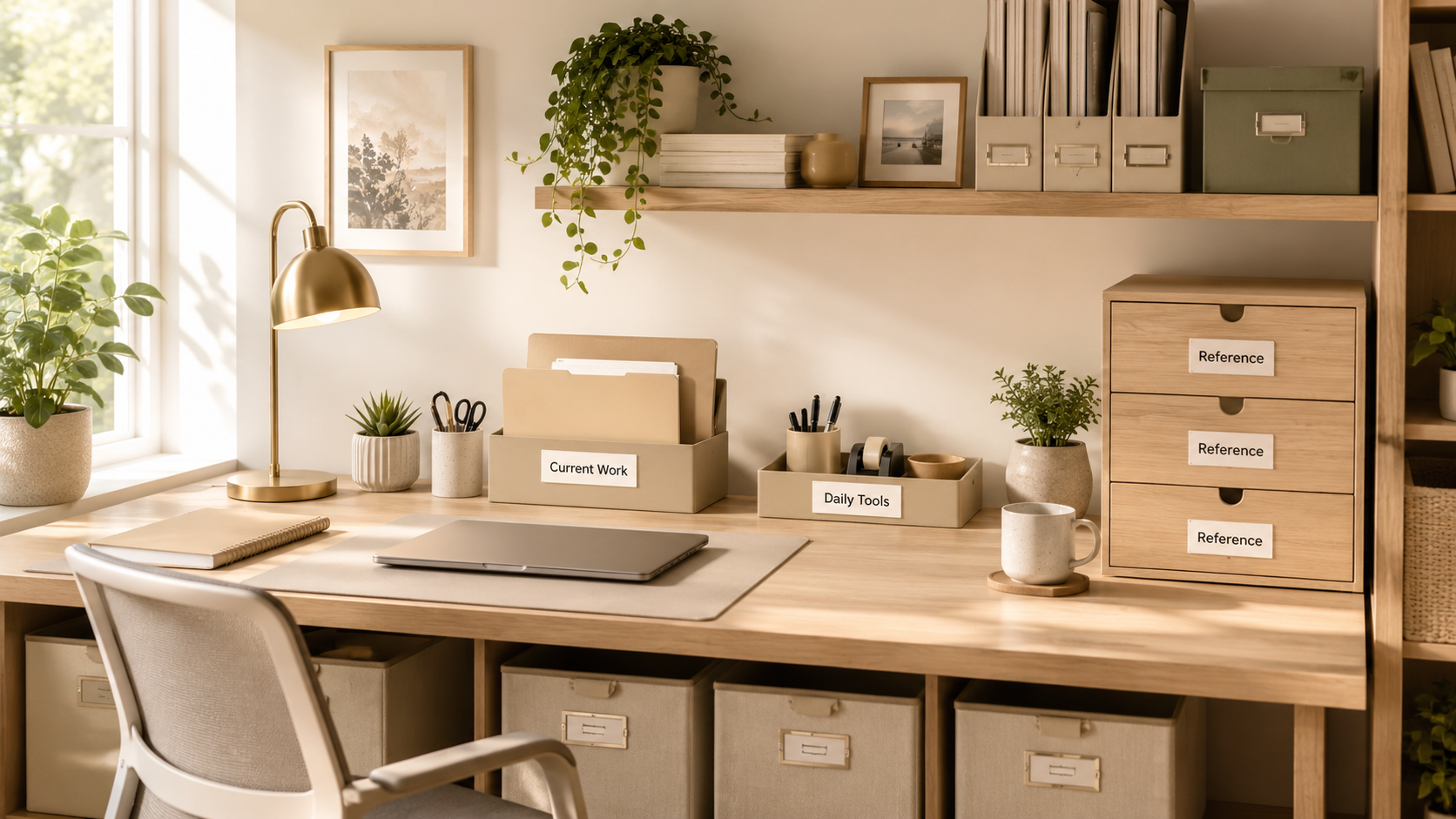
A visual organization system should simplify what the client actually sees, not put every possession on display all at once. So in an office, it might mean one visible tray for urgent documents, and a labeled cabinet for completed files. In a closet, that could be open sections for daily clothing and concealed storage for seasonal pieces. In a pantry, it might be transparent containers for frequently used foods, plus larger labeled zones for backstock.
Professional Home Organization for Visually Minded Professionals
A professional workspace needs to enable focus while still staying functional, even during those demanding weeks. For entrepreneurs, executives, creatives, and remote professionals, organization is tightly tied to output. When you waste time looking for a charger, a document, a sample, or a notebook, it breaks your concentration and adds extra stress.
A customized workspace can include:
- 🗺️ Clearly defined zones for focused work and administrative tasks
- 🎯 A limited number of visible priorities
- 🧰 Accessible storage for daily tools
- 📄 Simple paper processing categories
- 🔌 Dedicated homes for cords and technology
- 🔄 A reset area for items that need to be returned later
The best workspace is not necessarily empty. It contains enough visual information to guide action without competing for attention.
How Full-Service Home Organization Creates Intuitive Systems
Designing an ADHD-friendly environment requires more than purchasing matching bins.
Products should be selected only after the workflow and categories have been established.
Everyday Order’s full-service home organization process includes hands-on sorting, editing support, product sourcing, system setup, placement, labeling, and styling. This allows every detail to serve a practical purpose.
The process can be applied to a home office, kitchen, pantry, closet, bathroom, garage, playroom, or an entire home.
Sorting and Simplifying ADHD-Friendly Spaces
Sorting provides a clear picture of what the client owns and how items relate to one another.
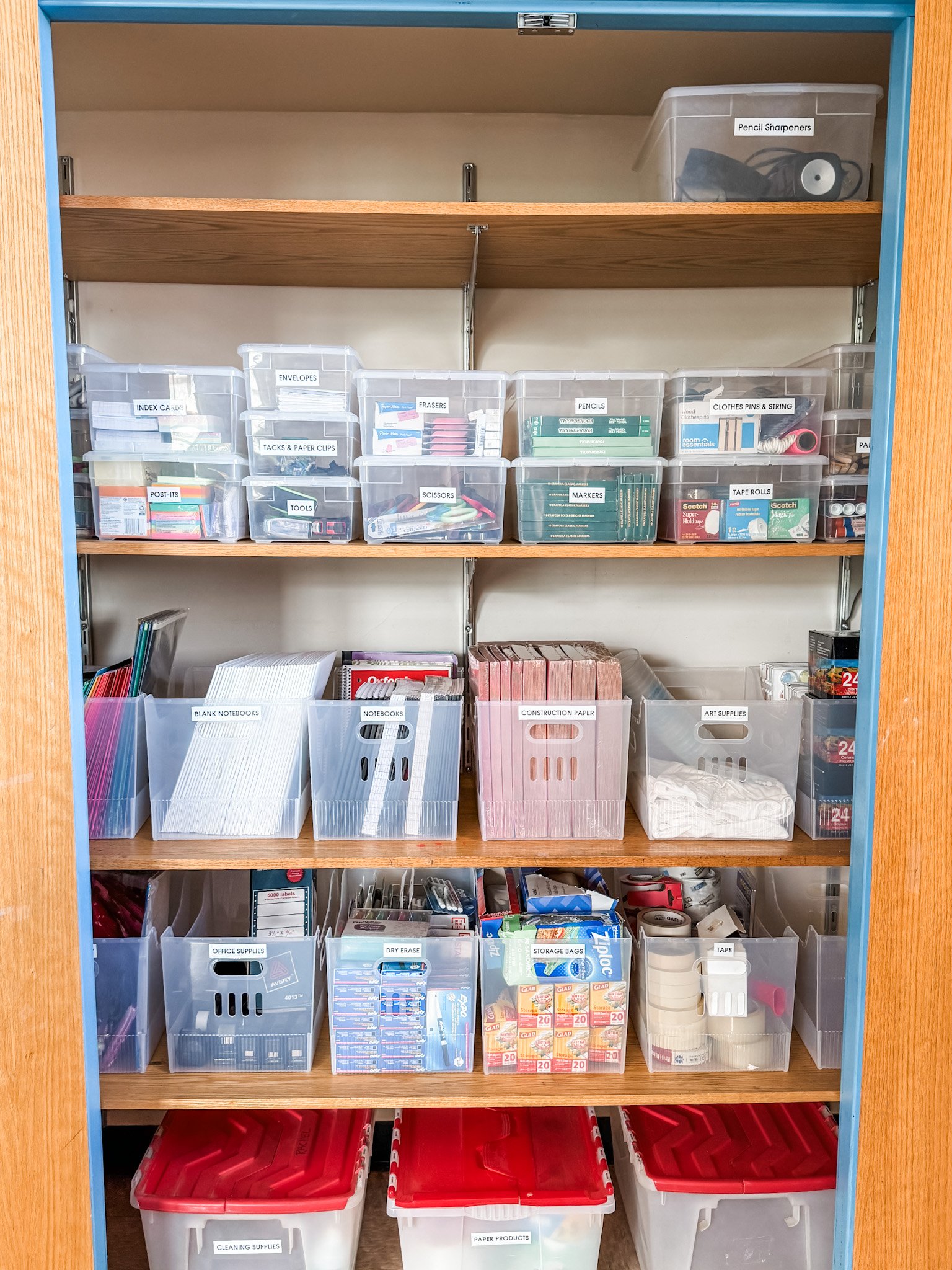
Broad, intuitive categories are often easier to maintain than highly specific ones.
Instead of creating several narrow office supply categories, a client may respond better to simple groups such as writing tools, mailing supplies, technology, and active projects.
Decluttering also reduces the number of decisions competing for attention. The goal is not
minimalism for its own sake. It is creating enough breathing room for important items to remain visible and accessible.
Strategic Placement and Clear Labels
Placement decides if a system can actually survive the daily grind. Items should be kept by how often they're used, where they're needed, and how quickly they can be put back without much hassle. Labels should lean on familiar phrasing, something that clicks with the client, so it feels intuitive, not like a riddle. For example, a category named current work can end up being more useful than a stiff label like pending documentation.
When every item has a logical home, cleanup requires less mental effort.
Maintaining Custom Organization Systems as Life Changes
Even a carefully designed system may need adjustments as routines, responsibilities, or priorities change.
A new project can bring additional materials into a home office. A schedule change can affect where bags and paperwork are dropped. A growing family can change how shared spaces are used.
Regular home refresh services can realign categories, replace labels, remove accumulated clutter, and update storage based on current habits. Everyday Order’s maintenance memberships provide scheduled support for past clients who want their systems refreshed without having to start over.
Maintenance should not be viewed as a failure. It is part of creating a responsive environment.
Build an Organized Home That Feels Natural
ADHD-friendly organization is not about imposing more rules. It is about reducing the number of obstacles between a person and the actions they want to complete.
A tailored environment can make belongings easier to find, routines easier to follow, and spaces easier to reset. It can provide visual guidance without overwhelming the senses. Most importantly, it can replace shame and frustration with practical support.
Everyday Order designs beautiful, functional spaces around how clients actually live. Through full-service home organization, thoughtful product sourcing, clear labeling, and ongoing maintenance, each system becomes a natural extension of the client’s habits.
Your home does not need to follow someone else’s definition of organization. It needs to work for you.
Ready to create a space that finally makes sense to you?